Product Catalog

Products

Introduction

Introduction

Llama and the Alpaca Nutrition

Origin of the Animal and Dietary Pattern in Native Habitat

Physiological Correlation with Feeding Preference

Environment Influence on Camelid Management

Specific Camelid Nutrient Requirement

Nutrition & Pregnancy

Getting Started with Alpacas

Selecting your Alpaca

Camelid Body Scoring

Herd Improvement through judicious Choice of Studs

Selection Considerations

Your Stud Decision

Alpaca Care and Diet

Feed Intake

Caring for Elderly Alpacas

What Do Alpacas Eat?

Vaccinations & Worming

Rickets & Phosphate Deficiency

Alpaca Basic Care, Bio-Security and Nutrition

Alpaca Husbandary

Alpaca Feed

Gestating Alpaca Feed

Alpaca Grower Feed

Alpaca Maintenance Feed

Alpaca Lactation Feed

Introduction

Beef Calf Finisher Feed

Beef Grower Feed

Beef Feed

Beef Stock Feed

Beef Livestock Feed

Beef Cattle Feed 1

Beef Cattle Feed 2

Beef Heifer Feed

Beef Cow Feed

Beef Livestock Feed

Beef Cattle Feed

Beef Cow Lactation Feed

Beef Calf Starter Feed 0-3 Months

Beef Calf Grower Feed 3-6 Months

Steer Feed and Young Bull Feed 6 – 12 Months

Calf Creep Feed

Bull Grower Feed 1

Bull Grower Feed 2

Beef Stock Feed for Cow on Pasture

Beef Cattle Feed

High Mg Beef Cattle Feed

Commercial Beef Stock Feed

Beef Cow Feed

Beef Cow Breeder Feed

Beef Calf Starter Feed

Beef Calf Grower Feed

Introduction

Describing Bison Diets

Grass and Feedlot Requirements

Genetics

Raising Bison

Starting and Managing a Bison Operation

Bison Starter Feed

Bison Grower Feed

Bison Maintenance Feed

Bison Finisher Feed

Bison Regular Feed

Bison Minbal Feed

Bison Mineral Supplement

Broiler Chicken Concentrate 10%

Broiler Poultry Concentrate 35%

Broiler Chicken Starter Concentrates 5%

Broiler Chicken Grower Concentrates 5%

Broiler Chicken Finisher Concentrates 5%

Broiler Concentrate 20%

Chicken Concentrate 5%

Poultry Concentrates 2.5%

Broiler Concentrates 2.5%

Broiler Poultry Concentrates 5%

Broiler Poultry Concentrate 5%

Broiler Concentrates 10%

Chicken Concentrates 10%

Chicken Starter Concentrate 5%

Chicken Finisher Concentrate 5%

Broiler Pre-Starter Concentrate 35%

Broiler Poultry Concentrates 30% for 0 – 5 Weeks

Broiler Poultry Concentrates 30% for 5 Weeks to Slaughter

Poultry Starter Concentrate 10%

Poultry Grower Concentrate 10%

Poultry Finisher Concentrate 10%

Broiler Chicken Starter Concentrate 5%

Broiler Chicken Grower Concentrate 5%

Broiler Chicken Finisher Concentrate 5%

Broiler Poultry Starter Concentrates 5%

Broiler Poultry Grower Concentrates 5%

Broiler Poultry Finisher Concentrates 5%

Broiler Chicken Starter Concentrates 7.5%

Broiler Chicken Grower Concentrates 7.5%

Broiler Chicken Finisher Concentrates 7.5%

Chicken Concentrate 10%

Broiler Chicken Concentrates 35%

Broiler Chicken Concentrate 5%

Broiler Poultry Concentrate 2.5%

Broiler Poultry Concentrates 2.5%

Poultry Concentrates 5% for Broilers

Poultry Concentrate 5% for Broilers

Broiler Concentrates 10%

Broiler Concentrate 10%

Broiler Poultry Starter Concentrate 5% 0-2 Weeks

Broiler Poultry Grower Concentrate 5% 2-5 Weeks

Broiler Poultry Finisher Concentrate 5% 5 Weeks to Slaughter

Poultry Starter Concentrates 30% 0 – 14 Days

Poultry Grower Concentrates 24% 15 – 32 Days

Poultry Finisher Concentrates 20% 33 Day – Market Weight

Broiler Starter Concentrates 35% 0 – 14 Days

Broiler Grower Concentrates 30% 15 – 32 Days

Broiler Finisher Concentrates 25% 33 Days to Market Weight

Broiler Chicken Starter Concentrate 12% 0-14 Days

Broiler Chicken Grower Concentrate 10% 15 – 32 Days

Broiler Chicken Finisher Concentrate 8% 33 Days to Market Period

Broiler Chicken Feed (0 – 3 Weeks)

Broiler Chicken Feed (3 – 6 Weeks)

Broiler Chicken Feed (6 – 8 Weeks)

Broiler Starter Feed

Broiler Finisher Feed

Broiler Poultry Starter Feed

Broiler Poultry Finisher Feed

Broiler Chicken Breeder Feed

Broiler Chicken Male Breeder Feed

Broiler Chicken Pre-Starter Mash

Broiler Poultry Starter Feed

Broiler Chicken Grower Feed

Broiler Poultry Finisher Feed

Pre Starter Broiler Chicken Feed 0 -10 Day

Broiler Chicken Feed 11 – 24 Days

Broiler Chicken Feed 25 – 42 Days

Broiler Chicken Feed 43 Days – Slaughter

Introduction

A Brief History of Camels

Camels – Ships of the Desert

Camel Biology

The Camels Life

General Overview of the Characteristics of Old World Camels

Anatomy of the Digestive Tract

The Food of Camels

Energy and Protein Requirements For Productivity

Ageing Camels by the Teeth

Understanding Basic Camel Life Process

Feeding Camels

Camel Health Management and Disease Prevention

Feeding the Racing Camel

Camel Physiology

Energy Metabolism in Camel

Camel Nutrition

Comparison of Camels with Cattle and Horses

Cattle Management and Disease Prevention

Camel Trainer Feed

Dairy Camel Feed

Racing Camel Feed – Economy

Camel Race Feed – Premium CML

Breeding Camel Feed

Racing Camel Feed

Camel Grower Feed

Camel Breeder Feed

High Energy Camel Feed

Camel Forage for Weak Camels

High Fiber Camel Feed

Breeding Camel Feed

Camel Maintenance Feed

Camel Calf Maintenance Feed

Camel Feed Concentrate

Camel Farm Feed

Camel Grower Feed

Camel Breeder Feed

High Energy Camel Feed

Special Beef Calf Concentrate

Special Beef Concentrate

Beef Concentrate 1

Beef Concentrate 2

Beef Cattle Concentrate 1

Beef Cattle Concentrate 2

Beef High Protein Cattle Concentrate

Beef Cattle Finisher Concentrate 1

Beef Cattle Finisher Concentrate 2

Beef Cattle Pasture Concentrate

Dairy Beef Grower Feed

Dairy Beef Cattle Finisher Concentrate

Performance Beef Cattle Concentrate

Beef Cattle Feed Supplement

Beef Cattle Concentrate

Beef Cattle Starter Concentrate

Beef Grower Concentrate 1

Beef Grower Concentrate 2

Introduction

Basic Cattle Nutrition

Digestion Process in Cattle

Cattle in Different Stages (Nutrition Perspective)

Mineral Needs of Dairy Cattle

Trace Minerals

Chelated Minerals

Internal Parasites of Ruminants

Signs of Heat (oestrus) in Ruminants

Calving (Parturition)

How Milk is Made

Feed and Water for Ruminants

Basic Milking Cattle Feed

High Energy Cattle Feed

Yellow Corn Cattle Feed

Cattle Feed Bran

Hi-Fiber Cattle Feed

High Yielder Dairy Cattle Feed

Mixed Sorghum Cattle Feed

Supplementary Cattle Feed

Dairy Cow Breeder Feed

Dairy Calf Starter Feed

Milking Cattle Feed

Optimum Milking Stock Feed

Transition Dry Cow Feed

Dairy Coarse Feed

Dairy Calf Starter Feed

Dairy Calf Grower Feed 1

Dairy Calf Grower Feed 2

Introduction

Feed Requirements

Reindeer

Reindeer Feeding and Nutritional Requirements

Feeding of farmed White-Tailed Deer

Elk on a Beef Farm

Deer Calf Feed

Deer Calf Grower Feed

Deer Maintenance Feed

Basic Deer Feed

Whitetail Deer Feed

Fawn and Lactating Doe Feed

Large Horned Deer Feed

Free Range Deer Feed

Reindeer Breeder Feed

Moose Breeder Feed

Moose Maintenance Feed

High Energy Deer Feed

Deer Grower Feed

Captive Deer Feed

Deer Reproduction Feed

High Energy Antelope Feed

Dear Feed for Weak Stock

High Fiber Deer Feed

Antelope Breeder Feed

Deer Maintenance Feed

Antelope Maintenance Feed

Textured Deer Feed

Alfalfa Hay

Peanut Hay Bale

Rhodes Grass Hay

Processed Dry Fodder

Sorghum Hay

Yellow Corn Hay

Millet Hay

Wheat Straw

Peanut Hay Pellets

Duck Nutrition

Nutrient Requirements of Ducks

Feeding Ducks

Feed Medications to Control Disease

Different Breeds of Duck

Guideline in rearing layer ducks

Health and Disease Control

Duck Management

Brooding and Rearing Ducklings and Goslings

Pasture for Goslings

Duck Starter Feed 0 – 2 Weeks

Duck Grower Feed 2 – 6 Weeks

Duck Finisher Feed 6 – 8 Weeks

Duck Breeder Developer Feed

Layer Duck Feed

Sea Duck Feed

Waterfowl Starter Feed

Waterfowl Breeder Feed

Waterfowl Maintenance Feed

Sinking Water Fowl Maintenance Feed

Elephant Feed

Asian Elephant Calf Feed

African Elephant Calf Feed

Elephant Gestation Breeder Feed

Elephant Late Gestation Feed

Elephant Lactation Feed

Introduction

Nutritional Requirement for Growing Emu

Management of Chicks

Grower Management

Fattening/Finishing Stage

Breeder Management

Incubation and Hatching

Feed Requirements for Emu

Recommendations for Ratite Diets

Emus – starting an emu farm

Emus – Catching and Handling

Managing Emu Egg Production

Incubation

Two basic types of incubation can be utilized – natural and artificial. To date, most emu farmers employ artificial incubation methods.

Natural Incubation

In natural incubation, the male emus become broody and are permitted to sit on the eggs.

When young females begin laying, eggs are commonly laid randomly throughout the pen. After a period or the onset of maturity, a nest site will be selected and eggs are then laid at this location. Scattered eggs are rolled together and often camouflaged with dry grass, sticks and leaves, etc. by the male emu.

The rate of lay is slow initially with several days between the early eggs. The rate increases to one egg every two days or so toward the end of the clutch.

After approximately 6-10 eggs have been laid, the mature male will become broody and begin sitting on the eggs. Additional eggs laid near him are rolled underneath to join the others. Over a few days, the male will reduce his metabolic rate to a point where he sits on the eggs full-time, will not eat or drink, and only stands several times daily to roll the eggs. It is advisable to remove other birds from the pen when a male begins sitting because group penning may result in fighting and egg damage and the male will not settle properly.

Once a male is fully broody, he can be approached quietly, and gently lifted to check the condition of the eggs.

The incubation period for emus is 56 days but it is good practice to check daily from day 50 to see if any chicks have hatched.

If chicks are to be reared in a brooder house, they should be removed at this daily check and taken to the brooder facility. If you are leaving the chicks for the male to rear, you should remove all unhatched eggs after the male moves off the nest. At an early age the chicks are prone to wander and care is needed to prevent predators such as crows, hawks and foxes from killing them.

Natural incubation requires more space and pens to move birds into; especially if the male is left to rear the chicks. If you plan to do this, you should obtain further information on this subject before starting because it will require different procedures.

There are problems associated with natural incubation including the potential for bacterial contamination of eggs, especially in wet conditions. Some eggs will be in the pen for two to four weeks before the male sits. During this time, daily temperature fluctuations may trigger the embryo to begin developing and the low night temperatures may kill the embryo – this is known as pre-incubation.

Despite these problems, reasonable hatching rates are possible using natural incubation.

Artificial Incubation

For artificial incubation, eggs are collected once or twice daily and placed in an incubator.

Eggs should be collected daily when possible to reduce pre-incubation problems and disinfected using a recognized egg-sanitation process and stored in a cool room at a temperature of 10-16°C for up to 10 days. Batches are then set in the incubator at regular intervals (setting batches at 10 day intervals is a common practice).

Specific emu egg incubators are available; however, poultry incubators can be converted to hold emu eggs with good results. The eggs should be taken out of cool storage, allowed to return to room temperature for approximately 12-18 hours, then placed in the incubator. As a guide, the incubator will need to be operated at a constant temperature of 35.25-35.5°C (dry bulb) and a relative humidity of 45-50% [26-27°C] (wet bulb) throughout the first 50 days of incubation.

The eggs will require turning a minimum of three times per day. This can be done manually or by using automatic turning devices in the incubator. Automatic turning methods can be installed in most incubators. Note, however that eggs should always be turned an odd number of times per day when turned manually. This ensures that the embryo does not go into the same position each night with the risk of it becoming stuck to the side of the shell and subsequently dying.

At day 50, the eggs are transferred to a separate, clean, hatching compartment. The hatcher should be operated at a slightly lower temperature, 35°C, and higher humidity, 28-29°C (wet bulb). The higher humidity helps to moisten the internal membranes and soften the shell to assist in the hatching process. Eggs are not turned during this period in the hatcher.

Emu eggs, like all other eggs, are susceptible to bacterial contamination and should be sanitized immediately after collection by using a recommended fumigant or egg washing product. Eggs can also be fumigated at certain stages during incubation. Empty incubators and hatching compartments also need to be sanitized between batches using the same products.

Artificial incubation is a specialized procedure and problems may occur if:

  1. Eggs are not collected regularly, fumigated or stored prior to being placed in the incubator
  2. Incorrect temperatures and humidities are used during incubation and hatching
  3. Incubator and hatching compartments are not cleaned or fumigated adequately

The egg is a living organism and needs to breathe. Fresh air (oxygen) is absorbed through the shell and stale air carbon monoxide and other gases are dispersed. It is extremely important that each day clean fresh air is allowed into the incubator and hatching chambers in order to satisfy this requirement. This is achieved by opening the doors for short periods of time, which occurs during manual turning or using the normal ventilation mechanisms of the machine.

Important Facts Related to Incubation:
  1. Collect eggs once or twice daily to minimize pre-incubation problems and bacterial contamination
  2. Disinfect eggs immediately after collection using recognized egg-sanitation fumigant or washing products
  3. Store collected eggs in cool room at 10-16°C for maximum 10 days before incubation
  4. Allow eggs to return to room temperature for 12-18 hours before placing in incubator
  5. Maintain incubator temperature at 35.25-35.5°C (dry bulb) with 45-50% relative humidity for first 50 days
  6. Turn eggs minimum three times daily, always using odd number of turns when done manually
  7. Transfer eggs to hatching compartment at day 50 with slightly lower temperature of 35°C and higher humidity of 28-29°C (wet bulb)
  8. Stop turning eggs once transferred to hatcher to allow proper positioning for hatching
  9. Check daily from day 50 onwards for hatched chicks in natural incubation (56 day incubation period)
  10. Remove other birds from pen when male begins sitting to prevent fighting and egg damage
  11. Sanitize empty incubators and hatching compartments between batches to prevent bacterial contamination
  12. Ensure adequate fresh air ventilation in incubator daily by opening doors briefly or using ventilation mechanisms
  13. Feed breeding stock Yembroos® breeder ration with proper calcium levels for strong shell formation and optimal egg quality
  14. Install automatic turning devices where possible to ensure consistent egg turning and reduce labor
  15. Monitor temperature and humidity levels closely as improper settings are major cause of hatching failures
 

Ratite Brooding

Brooding Systems

Emu – Nutritional Requirement for Growing Birds

Infectious and Parasitic Diseases of Farmed Ratites

Viral Diseases in Ratites

Prevention of Ratite Diseases

Emu Starter Feed

Emu Pre Starter Feed

Emu Grower Feed

Emu Finisher Feed

Emu Breeder Feed

Emu Maintenance Feed

Emu Yearling Future Breeder Feed

Adult Grower and Non Breeding Emu Feed

Breeding Emu Feed

Emu Maintenance Feed

Emu Starter Feed (0 – 6 Weeks)

Emu Grower Feed (6 – 36 Weeks)

Emu Finisher Feed (36 – 48 Weeks)

Emu Breeder Holding Feed (48 Weeks to Sexual Maturity)

Emu Finisher Feed (36 – 48 Weeks)

Emu Breeder Holding Feed (48 Weeks to Sexual Maturity)

Emu Breeder Feed (from 3 to 4 Wks Before Onset of Egg Production)

Emu Lifecycle Feed

Flamingo Distribution

Flamingo Habitat

Flamingo Migration

Flamingo Population

Physical Characteristics

Appendages

Head

Feathers

Senses

Swimming and Wading

Behavior

Diet & Eating Habits

Reproduction

Incubation

Incubation begins soon after the egg is laid. The incubation period is between 27 and 31 days.

Both the male and female take turns incubating the egg by sitting on top of the nest mound.
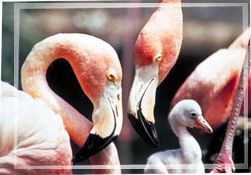
 

Both parents share in the incubation of the egg and the rearing of the chick.
  1. During incubation, flamingos will stand, stretch their wings, and preen themselves frequently.
  2.   A parent bird carefully lifts and turns the egg with its bill.

Eggs that fall from the nesting mound are not retrieved.

HATCHING
Hatching takes between 24 and 36 hours.
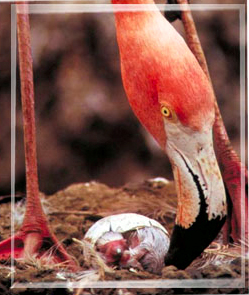
Hatching can take between 24 and 36 hours, during which the chick calls frequently and the parents respond anxiously.

The chick calls frequently as it breaks out of the shell.

The chick breaks through the shell using a growth on its bill called an “egg tooth”. The egg tooth is not a true tooth and falls off soon after the chick hatches.

Flamingo parents appear anxious while their chick is hatching. They stand, look at the egg, and vocalize.

The adult stands, looks down, and gently preens and nibbles at the emerging chick.

CHICK AT HATCHING
Newly-hatched chicks have gray or white down feathers, a straight red bill, and plump, swollen red or pink legs.

The leg swelling decreases approximately 48 hours after hatching, and the red bill and legs turn black in seven to ten days.

After hatching, a flamingo chick is not very agile. Movement is limited to pushing its wings or lifting its head.


Flamingos are attentive parents.
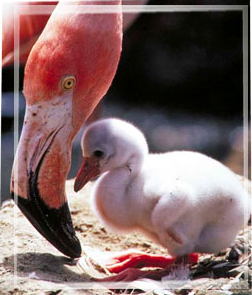
Care of Young

How they feed

Captivity and feeding

Flamingo Feed

Flamingo Breeder Feed

Crane Starter Feed

Adult Crane Feed

Bobwhite Quail (Colinus virginianus)

Coturnix Quail

Incubation

Pre-incubation Egg Care:

Successful quail propagation begins in the pre-incubation period. Eggs should be collected twice daily and more frequently in hot weather. Special care must be taken in collecting and handling quail eggs for they are thin-shelled, break more easily than chicken eggs. Eggs should be of a uniform size – extreme large or small size eggs has low hatchability. Eggs held for incubation should be kept in a cool, clean, dust-free room at a temperature of 14 + 3ºC (55 + 5ºF) and 70 + 10 percent relative humidity. Eggs should be stored large end up and they should not be held for more than 7 days before being placed in the incubator. Set only clean eggs. Eggs to be incubated should not be washed; if cleaning is required, it should be done with a clean abrasive or sandpaper. The egg is mostly water and quail egg dehydrates more rapidly. Eggs stored in PVC bags may be stored for a longer period of time (14-21 days) and the hatch will be higher than from unpackaged eggs stored as described above.

Natural Incubation:

Although it is possible to incubate quail eggs under a broody hen or bantam, it is not usually practice in Singapore. From behavioral studies, some coturnix hens will sit on their own eggs in a nesting box, but this is not the general rule.

Artificial Incubation:


Quail eggs can be incubated successfully in any standard size commercial incubators. However, trays must be modified by adding 1.3 cm x 2.5 cm strips of welded wire to the chicken egg tray holders. Special wooden tray can be ordered to suit the size of quail eggs. Be sure to orient the eggs large end up in the setting trays or place flat in a horizontal tray. Quail eggs will hatch successfully if they are placed in an incubator in any position except with the large end down. The incubator should have a fan to provide adequate air circulation because the developing embryos use oxygen and give off carbon dioxide and heat. Little ventilation is needed at the beginning but the requirement increases as incubation progresses. The machine should be equipped to allow automatic turning of all eggs through an angle of 90 at least 4-6 times per 24 hours. Turning regularly is particularly critical in early incubation to prevent the embryos from adhering to the shell membrane. Lack of turning during the first 3 to 4 days will produce some malformed embryos as well as other minor defects. Turning may be discontinued after 14 days.


Fan-ventilation incubators should be set at 37.5 + 0.3 ºC. If the temperature of the incubator exceeds these recommendations many embryos may die. During the hatching period temperature should be lowered 0.5 ºC. A relative humidity of about 60 percent is satisfactory during incubation and should be raised to about 70 percent during the hatching period. The incubation period is 16 1/2 to 17 1/2 days. The duration of incubation may range from 16 to 18 days depending upon temperature, humidity and genetic variability. Some farmers in Singapore transfer the developing eggs to a separate hatcher on 15th day of incubation. It takes 10 hours from pipping to hatch, and an additional 5 hours for drying the chick. Then the quail chicks are ready to be distributed to other farmers or go into the brooder for rearing.


Brooding and Care of Small Quail

Housing For Laying Quail

Nutrition Requirements of Japanese Quails

Game Bird Starter Feed

Game Bird Breeder Feed

Game Bird Maintenance Feed

Multiple Species Game Bird Feed

Multiple Species Game Bird Breeder Feed

Ring Necked Pheasant Starter Feed 0 – 4 Weeks

Ring Necked Pheasant Grower/Finisher Feed 4 – 12 Weeks

Ring Necked Pheasant Holding Feed 12 Weeks and above

Ring Necked Pheasant Adult Breeder Feed

Chukar Partridge Starter Feed 0 – 6 Weeks

Chukar Partridge Grower / Finisher Feed 6 Weeks – Market

Chukar Partridge Breeder Feed

Hungarian Partridge Starter Feed 0 – 4 Weeks

Hungarian Partridge Grower Feed 4 – 8 Weeks

Hungarian Partridge Finisher Feed > 8 Weeks

Hungarian Partridge Breeder Feed > 8 Weeks 2

High Energy Giraffe Feed

Giraffe Grower Feed

Zoo Held Giraffe Feed

Breeding Giraffe Feed

Weak Giraffe Supplement

High Fiber Giraffe Feed

Breeding Giraffe Feed

Giraffe Maintenance Feed

Medicated Giraffe Feed Concentrate

Introduction

Goat Nutrition

Nutrient Requirements

Factors Influencing Animal Requirements

Goat Management and Disease Prevention

Suggested Supplemental Feeding Program for Goats

Goat Breeds

Dairy Goat Feed

Economy Dairy Goat Feed

Goat Fattener Feed

Lactating Dairy Goat Feed

Goat Grower Feed (for 3 Months and above)

Goat Kid Creep Feed

Pregnant Doe Feed

Goat Starter Feed 0 – 3 Months

Goat Grower Feed 3 – 6 Months

Goat Finisher Feed

Lactating Doe Feed

Mature Buck Feed

Meat Goat Starter Feed

Goat Grower Feed

Boer Goat Developer Feed

Meat Goat Grower & Finisher Feed

Goat Lifecycle Feed

Goat Meat Production Feed

Goat Grower Feed

High Fiber Goat Feed

Goat Breeder Feed

High Performance Goat Feed

Goat Fattener Supplement

Goat Breeder Feed

Goat Maintenance Feed

Goat Feed Concentrate

Guinea Fowl Broiler Starter Feed (0 – 4 Weeks)

Guinea Fowl Broiler Grower Feed (5 – 10 Weeks)

Guinea Fowl Broiler Finisher Feed (11 – 16 Weeks)

Guinea Fowl Broiler Breeder Feed (2 Weeks prior to Egg Laying)

Guinea Fowl Layer Feed (0 – 4)

Guinea Fowl Layer Feed (5 – 8 weeks)

Guinea Fowl Layer Feed (9 – 12 weeks)

Guinea Fowl Layer Feed (13 – 21 weeks)

Guinea Fowl Layer Feed (22 – 28 weeks)

Guinea Fowl Layer Feed (29 – 30 weeks)

Guinea Fowl Layer Feed (31 – 50 weeks)

Guinea Fowl Layer Feed (51 – 70 weeks)

Introduction

Feeding of Suckling Foals and Weanling

Yembroos® Non-Heating Endurance Mix

How to age horses

Hoof (foot) care, shoeing and lameness

Colic

Internal parasites of Equines

Skin and Coat Disorders of Equines

Heat (oestrus), Mating and Pregnancy

Foaling and Caring for the Young

Feed and Water for Equines

African Horse Sickness

Horse Feed Pellets

Economy Foal Starter Feed

Stud Farm Feed

High Protein Horse Feed

Coarse Horse Mix Mash

Sports Horse Feed

Horse Balancer Feed

Endurance Race Horse Feed

Dressage Horse Feed

Equine Conditioner Feed

Economy Horse Feed

Premium Race Horse Mix

Economy Racing Horse Feed

Premium Endurance Horse Feed

Hi-Fiber Horse Feed

Millennium Horse Feed Mix

Super Horse Power Feed

Pony Feed

Equine Breeder Feed

Premium Foal Starter Feed

Yearling Developer Feed

Retiring Horse Feed

High Energy Performance Horse Feed

Equine Grower Feed

Horse Feed for Stud Farm

Breeding Mare Feed

High Throttle Horse Feed

Equine Feed for Weak Horses

High Fiber Horse Feed

Horse Breeder Feed

Stallion Maintenance Feed

Textured Equine Concentrate

Senior Horse Feed

Equine Lifecycle Feed

Miniature Pony Feed

High Performance Racing Feed

Equine Performance Farm Mix 50%

Racing Horse Feed – JS

Racing Horse Feed – WC

Foal Grower Feed

Grain Free Horse Feed

Horse Feed – TC

Stallion Breeder Feed

Lamicert Feed

Kangaroo Feed

Layer Starter Concentrate 22.5% for 0-5 Weeks

Layer Grower Concentrate 23.5% for 6-10 Weeks

Layer Developer Concentrate 27.5% for 11-15 Weeks

Pre-Lay Concentrate 27.5% for 16 Weeks to 5% Production

Layer Concentrate 27.5% from 5% Production till 45 Weeks

Layer Concentrate 25% for 45 – 60 Weeks

Layer Concentrate 22.5 % 60 Weeks +

Layer Concentrate 20%

Layer Concentrate 35%

Layer Breeder Concentrate 5%

Layer Concentrate 5% for 0 – 8 weeks of life

Layer Concentrate 5% for 9 – 18 weeks of life

Egg Layer Concentrate 5% for Laying Stage

Layer Pullet Concentrate 30%

Layer Concentrate 30%

Layer Breeder Concentrate 30%

Layer Starter Concentrate 30% for 0 – 8 Weeks

Layer Grower Concentrate 30% for 9 – 20 Weeks

Layer Concentrate 10% for 8 – 18 Week

Egg Layer Concentrate 10% for 19 Week onwards

Layer Chicken Concentrates 25% for 0 -8 Weeks

Layer Concentrate 25% for 9 – 18 Weeks

Layer Concentrate 25% for 19 Weeks onwards

Layer Concentrate 5% for 0-8Weeks

Layer Concentrate 5% for 9 – 18 Weeks

Layer Concentrate 5% for 19 Weeks onwards

Layer Concentrate 7.5% for 0-8 Weeks

Layer Concentrate 7.5% for 9-18 Weeks

Layer Concentrate 7.5% for 19 Weeks onwards

Layer Concentrate 35% for 0-8 Weeks

Layer Concentrate 35% for 9 – 18 Weeks

Layer Concentrate 35% from 19 Weeks onwards

Layer Concentrates 5%

Layer Chicken Concentrate 5%

Layer Chicken Concentrate 33% 16 – 17 Weeks

Layer Chicken Concentrate 33.8 % 18 – 21 Weeks

Layer Poultry Concentrates 32 % 22 – 28 Weeks

Layer Poultry Concentrates 30.2 % 29 – 49 Weeks

Layer Poultry Concentrates 28.5 % 49 – 59 Weeks

Layer Poultry Concentrate 27.5 % 59 – 67 Weeks

Layer Poultry Concentrate 27 % 67 – 74 Weeks

Layer Poultry Concentrate 25 % 74 Weeks

The Digestive System of the Bird

Feed materials for birds

Incubators and Brooders

Brooding

Food intake

Layer poultry Feed (0 – 6 weeks)

Layer Poultry Feed (6 – 14 weeks)

Egg Layer Poultry Feed (14 – 20 weeks)

General Layer Poultry Feed

Breeder Layer Poultry Feed

Layer Chick Feed – Chick Mash

Layer Chicken Grower Feed

Laying Hen Feed

Breeding Layer Chicken Feed

Layer Chick Feed

Layer Chick Grower Feed

Egg Laying Chicken Feed

Layer Poultry Feed

Layer Breeder Feed

Breeder Chick Feed

Breeder Chicken Grower Feed

Chick Starter Mash

Pullet Grower Feed

Pullet Developer / Prelay Mash

Layer Poultry Feed

Layer Chicken Feed

Heavy Breed Pre Starter Premium Feed

Heavy Breed Pre Starter Economy Chicken Feed

Heavy Breed Starter Chicken Feed

Heavy Breed Grower Poultry Feed

Heavy Breed Pre-lay Chicken Feed

Heavy Breed Layer Chicken Feed

Heavy Breed Rooster Feed

Light Breed Chicken Starter Feed

Light Breed Grower Chicken Feed

Light Breed Rooster Feed

Light Breed Layer Chicken Feed

White Egg Laying Chicken Feed 0-6 Weeks

White Egg Laying Chicken Feed 6-12 Weeks

White Egg Laying Chicken Feed 12 – 18 Weeks

White Egg Laying Chicken Feed 18 Weeks to 1st Egg

Brown Egg Laying Chicken Feed 0 to 6 Weeks

Brown Egg Laying Chicken Feed 6 to 12 Weeks

Brown Egg Laying Chicken Feed 12 to 18 Weeks

Brown Egg Laying Chicken Feed 18 Weeks to 1 st Egg

White Egg Laying Chicken Feed (80g Feed)

White Egg Laying Chicken Feed (100g Feed)

White Egg Laying Chicken Feed (120g Feed)

Llama General Feed

Gestating and Lactating Llama Feed

Llama Grower Feed

Llama Maintenance Feed

Lovebirds Care and Information

Lovebird Nutrition and Habitat

Social Behaviours

Lovebird Breeding/Reproduction

Lovebird Feeding

Rearing Tips

Black Masked Lovebird

Blue Masked Lovebird

Dutch Blue Lovebird

Fischer's Lovebird

Lutino Lovebird

Peach-faced Lovebird

Abyssinian Lovebird

Love Bird Maintenance Feed

Love Bird Breeder Feed

Love Bird High Energy Feed

Love Bird Feed (Prestarter to Weaning)

Basic Love Bird Feed

Premium Love Bird Feed

Introduction

Introduction

Ostrich Feeding Guide

Ostrich Production and Nutrition

General Guidelines for feeding Ostriches

Bird Body Condition Is Most Important

Ostrich Chick Starter Feed

Ostrich Chick Pre Starter Starter Feed

Ostrich Grower Feed

Ostrich Maintenance Feed

Ostrich Finisher Feed

Ostrich Breeder Feed

Ostrich Breeder Feed

Breeding Ostrich Feed

Adult Grower and Non Breeding Ostrich Feed

Ostrich Starter Feed (0 – 9 Weeks)

Ostrich Grower Feed (9 – 42 Weeks)

Ostrich Finisher Feed (42 Weeks to Mkt Weight)

Ostrich Breeder Holding (42 Weeks to Sexual Maturity)

Ostrich Breeder Feed (4 or 5 Wks Before Onset of Egg Production)

Ostrich Lifecycle Feed

Parrot Maintenance Feed

Parrot Breeder Feed

Pig Concentrate 10%

Piglet Milk Replacer Concentrate 5% 0-18 Weeks

Piglet Concentrate 12.5% 7-18 Kgs

Piglet Starter Concentrate 10% for 18 – 35 Kgs

Pig Finisher Concentrate 10% for 70 – 110 Kgs

Sow Gestation Concentrate 10%

Sow Lactation Concentrate 10%

Introduction

Handling the young pig

Teeth clipping in young pigs

Internal parasites of pigs

Skin infections of pigs

Heat (oestrus) in the sow

Pregnancy and farrowing (giving birth)

Care of the sow and piglet

Castrating piglets

Feeding pigs

Ear tagging or notching (identification)

Pre-Starter Piglet Feed

Piglet Starter Feed

Premium Pig Starter Feed

Piglet Grower Feed – Economy

Pig Grower Feed

Pig Finisher Feed

Gestating Pig Feed

Lactating Pig Feed

Premium Pig Fattener Feed

Pig Maintenance Feed

Active Adult Pig Maintenance Feed

Pig Feed for 6 – 10 lb Live Body Weight

Pig Feed for 10 – 20 lb Live Body Weight

Pig Feed for 20 – 45 lb Live Body Weight

Pig Feed for 45 – 110 lb Live Body Weight

Pig Feed for 110 – 180 lb Live Body Weight

Pig Feed for 180 – 265 lb Live Body Weight

Pig Feed for Sexually Active Boars

Gestation Pig Feed (For 440 pounds with 12 pigs)

Lactating Pig Feed (for 385 Pound with 0.44 lb/day weight gain)

Commercial Mini Pig Starter Feed

Medicated Pig Starter Feed

Commercial Pig Grower Feed

Commercial Pig Breeder Feed

Porcine Diet Grower Feed

Mini-Pig HiFi Grower Feed

Pig Feed 26

Swine Feed 24

Porcine Feed 21

Pork Feed 18

Pig Feed 16

General Pig Feed 14

Sexually Active Boar Feed

Gestating Pig Feed 12

Lactating Porcine Feed

Introduction

YEMBROOS® Pigeon Forage

Selecting A Quality Breeding Pair

Good Feather & Handling for Quality

Temperature and Humidity Control

Ventilation

Respiratory Diseases

Check List For Respiratory Disease

Pigeon Feed Mash

Pigeon Feed Mix

Racing Pigeon Feed

Breeding Pigeon Feed

Pigeon Lifecycle Feed

Primate Lifecycle Feed

Captive Primate Feed

Primate Browser Feed

Primate Maintenance Feed

High Fibre Primate Feed

Primate Grower Feed

How to Get Started

Accommodations

Incubation

Beyond being able to enjoy fresh eggs and have a quality meal periodically, one of the most captivating aspects of this pursuit is to artificially incubate the eggs. Beginning around Easter each year, eggs are gathered daily and placed in a cool humid location; the basement is perfect for egg storage. Eggs are stored with the pointed end facing down and retained for no more than seven days. The eggs are then transferred to an incubator for the required number of days for the chicks to develop inside the eggs. Coturnix quail develop in 17-18 days while Bobwhite quail need 23 days. There are numerous incubators to select from. The HOVA-BATOR incubator was introduced over 25 years ago and is the first one I began with. This incubator is constructed of styrofoam. It is highly susceptible to fluctuations in room temperature so if you choose to purchase one of these, it should be situated in a room where the temperature remains constant. Obtain one with a turbofan to enhance the air circulation within.

If you ever progress into breeding rare and endangered species, you will likely want to invest in something more advanced like a Sportsman 1202, a cabinet style incubator. Both the HOVA-BATOR and the Sportsman 1202 are manufactured by GQF Manufacturing Company located in Savannah, Georgia. Artificial incubation is both an art and a science. To achieve excellent results when incubating, you need precisely the right combination of quality eggs, a temperature which remains constant, adequate ventilation, and proper moisture conditions. Be certain to read the instructions and either purchase or borrow a book from the library on incubation. And, if you opt to begin with a HOVA-BATOR, you should invest in an automatic turner unless you want to turn the eggs yourself daily, at least three times.

Once the eggs are prepared to hatch, you need to elevate the humidity so that the chicks don’t become stuck as they’re emerging from their shell. This is accomplished by filling the troughs in the bottom of the incubator tray with water. Three days before hatching, the eggs should be positioned on top of the hardware cloth (wire mesh) which accompanies the incubator. If a turner was utilized, it should be removed. The hardware cloth provides them an excellent foothold when they attempt to stand. Some people place newspaper on top of the wire which is a serious mistake as it is too slippery and results in crippled chicks. As a matter of fact, I have even begun using something called “slip grip” on top of the hardware cloth in the incubator. You can purchase this at your local home improvement store. It’s the same material people use for lining the shelves in their cupboards to prevent expensive dishware from sliding off when positioned vertically. It’s completely washable and reusable. The chicks should remain in the incubator for 24 hours. During hatching, avoid opening the incubator because it causes the moisture to escape and maintaining that moisture is critically important for a successful hatch. Depending on which model you’re using, hatching can occur over a very brief or somewhat extended time period. Eggs developing in the Sportsman will hatch within a few hours whereas those from a HOVA-BATOR require a full day and sometimes two days. That’s because the Sportsman is a superior machine than the HOVA-BATOR. Don’t invest in a Sportsman until you’ve been practicing this for a couple of years and you know that you want to continue this for the long term. A Sportsman incubator is a substantial capital investment if you’re just experimenting to see if you enjoy it or not.

Brooders

Feeding Chicks

Hatching and Brooding Quail

Breeding Quail

The Bobwhite Quail

Medications Used In Quail Feed

Blue Scaled Quail

The Button Quail

The California Valley Quail

Raising Coturnix Quail

Thoughts on Raising Coturnix Quail

The Gambel Quail

The Texas A&M Quail

Tips for Raising Quail Birds

Quail Breeding

Brooding and Care of Japanese Quail

Quail Keeping

Minerals Required for Japanese Quails

Quail Starter Feed

Quail Starter Feed 2

Quail Starter Feed {for Gaming}

Quail Grower Feed {for Gaming}

Quail Grower Feed {for Gaming} 2

Quail Finisher Feed {for Gaming}

Quail Finisher Feed {for Gaming} 2

Quail Breeder Feed {for Gaming}

Quail Breeder Feed {for Gaming} 2

Quail Starter 0-6 Weeks

Quail Finisher Feed 0-6 Weeks

Quail Starter Feed 0-6 Weeks (at flight)

Quail Developer Feed 6-16 Weeks (at flight)

Layer Quail Starter Feed 0-6 Weeks (for Layer Quails)

Layer Quail Developer Feed 6-20 Weeks (for Layer Quails)

Layer Quail Developer Feed 20 + Weeks (for Layer Quails)

Coturnix Quail Starter Feed 0-6Weeks (for Layer / Broiler Quails)

Coturnix Quail Finisher Feed 6 Weeks to Market (for Broiler Quails)

Coturnix Quail Layer Feed 6 Weeks + (for Layer Quails)

Quail Layer Feed

Quail Breeder Feed

Bob White Quail Starter Feed 0 – 6 Weeks

Bob White Quail Grower Feed 6 – 10 Weeks

Bob White Quail Finisher / Holding > 10 Weeks

Bob White Quail Breeder Feed

Japanese Quail Starter / Grower Feed 0 – 6 Weeks

Japanese Quail Finisher Feed 6 Weeks to Market

Japanese Quail Breeder Feed

Introduction

Basic Nutrients for Rabbits

Role of Fiber in Rabbit Nutrition

Role of Carbohydrates in Rabbit Nutrition

Role of Protein in Rabbit Nutrition

Role of Vitamins in Rabbit Nutrition

Role of Minerals in Rabbit Nutrition

Role of Water in Rabbit Nutrition

Nutritional Recommendations

Role of Hay in Rabbit Diet

Calcium content of Raw Vegetables

Rabbit Feed

Laboratory Rabbit Feed

Rabbit Breeder Feed

High Fiber Rabbit Grower Feed

Rabbit Mix Mash

Rabbit Mix

Rabbit Feed (0 – 365 Days)

Adult Rabbit Feed

Breeding – Lactating Rabbit Feed

Angora Rabbit Feed

High Energy Rhino Production Feed

Rhino Grower Feed

Captively Held Rhino Feed

Rhino Breeder Feed

Rhino Healer Feed Supplement

High Fiber Rhino Feed

Rhino Maintenance Feed

Textured Rhino Feed Concentrate

Introduction

Rodent Feed For Bio Medical Researches

Rodent Complete Life Cycle Feed

Rodent Lab Diet

Rodent Breeder Feed

Rat Reproduction and Lactation Feed

Mice Maintenance Feed

Breeding and Lactating Mice Feed

Mice Breeder Feed

Guinea Pig Complete Life Cycle Feed

Guinea Pig Grower Feed

Hamster / Gerbil Life Cycle Feed

Essential Nutrient Requirements of Sheep

Creep Feeding

Feeding Lambs

Choice of Breed

Commercial Sheep Production

Selection and Breeding

Crossbreeding

Improving Economically Important Traits

Minimizing Genetic Defects

Normal Breeding Habits of Sheep

Effects of Environment

Effect of Nutrition

Using Hormones to Control Reproduction

Accelerated Lambing or Out-of-Season Lambing

Nutrition of the Ewe

Requirements During Gestation

Requirements During Lactation

Lambing Methods

Grafting Lambs

Colostrum

Lamb Starter Mash

Ewe & Lamb Grower Feed

Sheep Feed Pellets

Economy Sheep Feed Mash

Premium Sheep Feed Mash

Sheep Fattener Concentrate

Ram Feed

Lamb Concentrate Feed

Lamb Feed

Pregnant Ewe Feed

Lamb Starter Feed 0-3 Months

Lamb Grower Feed 3-6 Months

Lamb Finisher Feed

Lactating Ewe Feed

Lamb Creep Starter Feed

Lamb Starter Feed

Lamb Grower Feed

Lamb Finisher Feed

Ewe Breeder Feed

Ewe Breeder Feed 2

Ewe Breeder Concentrate

Sheep Grower Feed

Sheep Finisher Feed

High Fiber Sheep Feed

Lamb Grower Feed

Sheep Farm Feed

Ewe Breeder Feed

High Energy Sheep Feed

Sheep Weight Gain Supplement

High Fiber Sheep Feed

Ram Breeder Feed

Sheep Maintenance Feed

Textured Sheep Feed Concentrate

Small Bird Nestling Hand Feeding Feed

Small Bird Maintenance Feed

Small Bird Breeder Feed

Small Bird High Energy Feed

Small Bird Feed (Day 1 to Weaning)

Soft Bill Bird Feed

Small Bird Feed for Adult Birds

Introduction

Introduction

Raising Turkeys

Turkey Facts

Rearing Turkey Organically

How To Raise Turkeys

Raising Turkeys with Chicken

Breeding Turkeys

Raise Turkeys For Profit

Turkeys Rearing Info

Turkey Care

Turkey Pre-Starter Feed

Premium Turkey Starter Feed

Turkey Starter Feed

Turkey Grower Feed

Turkey Finisher Feed

Turkey Feed for 0 – 4 weeks Male/ Female Age

Turkey Feed for 4 – 8 weeks Male/ Female Age

Turkey Feed for 8 – 12 Weeks Male Age & Female Age 8 – 11 Weeks

Turkey Feed for 12 – 16 Weeks Male Age & Female Age 11 – 14 Weeks

Turkey Feed for 16 – 20 Weeks Male Age & Female Age 14 – 17 Weeks

Turkey Feed for 20 – 24 Weeks Male Age & Female Age 17 – 20 Weeks

Professional Turkey Maintenance Feed

Professional Turkey Breeder Feed

Introduction

Wheat Bran Pellets

Wheat Bran Pellet

Textured Wheat Bran Pellet

Introduction

Introduction

Zebra Feed

High Energy Zebra Feed

Zebra Production Feed

Zebra Grower Feed

Captive Held Zebra Feed

Zebra Breeder Feed

Captive Held High Energy Zebra Feed

Zebra Weight Gain Supplement

High Fiber Zebra Feed

Breeding Zebra Feed

Zebra Maintenance Feed

Zebra Maintenance Feed

Textured Zoo Animal Concentrate

Wild Herbivore Feed